Kare Kare Recipe

Kare Kare is a type of Filipino stew with a rich and thick peanut sauce. It is a popular dish in the Philippines served during special occasions. The traditional recipe is composed of ox tail. There are instances wherein both ox tripe and tail are used. The vegetable components of the dish are string beans, eggplant, bok choy, and banana blossoms. Lightly browned toasted ground rice is used to thicken the sauce


Palayok or clay pot is used to cook this dish. It also functions as the serving bowl at the same time.The best way to eat kare-kare is to pair it with plain white rice. Bagoong alamang or fermented shrimp paste completes the dish by providing flavor. Simply combine a spoonful of rice and kare-kare with a small portion of bagoong and enjoy!

How to Cook Kare Kare

Let’s talk about how I cooked the version in this recipe post. There are three main processes: tenderize the meat, make the sauce, and prepare the vegetables.

Prepare the meat by boiling it along with chopped onion. This will make it tender while providing flavor at the same time. Oxtail needs to be very tender for best results. It takes around 3 hours to boil when cooking using the traditional method. A quicker way is to use a pressure cooker. It cuts the cooking time by more than half.

The peanut sauce can make or break your dish. It is important to have the proper ratio of ingredients to be able to achieve the ideal consistency of the sauce. It should not be too thick or very thin. I use both peanut butter and crushed peanuts to make the sauce. It provides a rich flavor to it. Annatto seeds make the color of the sauce reddish. You will need to extract the color from the seed by soaking it in warm water for around 12 minutes. The colored water is used to make the dish, not the seed. Discard the seed after use. Thicken the sauce with toasted ground rice.

Vegetable is an important component of kare kare. It can be cooked with the meat or it can be added when serving the dish. I opted to cook the vegetables separately by sautéing with garlic.

Cooking Tips

Use a pressure cooker to quickly tenderize the oxtail. It takes me 30 minutes to achieve the result, compared to around 3 hours when done the traditional way.

Make sure to monitor the amount of water when boiling using the traditional method. Pour more water as needed until the meat tenderizes completely.

Bagoong alamang or shrimp paste is an essential component of the dish. It should be cooked completely before serving. Refer to this bagoong recipe for guidance. You can also purchase precooked bottled bagoong alamang from the supermarket.

Alternative Ingredients

I almost tried every meat in cooking Kare-Kare. Oxtail, pata, cow’s face or maskara, and tripe are my favorites.

Toasted ground rice is traditionally used to thicken the sauce. This ingredient is nice to have. You can use cornstarch or potato starch as alternatives.

Annatto comes in many form. Annatto powder or annatto paste can be used a substitute for the seed. These are also more convenient to use.

Kare Kare

This is a recipe for Kare-kare or ox tripe stew

 Course Beef, Main Dish 

Cuisine Filipino 

Keyword filipino kare kare, kare kare, kare kare recipe 

Prep Time 10 minutes 

Cook Time 2 hours 30 minutes 

TotalTime 2 hours 40 minutes 

Servings  people 

Calories 934 kcal 

Ingredients

  • 3 lbs oxtail cut in 2 inch slices you an also use tripe or beef slices
  • 1 piece small banana flower bud sliced
  • 1 bundle pechay or bok choy
  • 1 bundle string beans cut into 2 inch slices
  • 4 pieces eggplants sliced
  • 1 cup ground peanuts
  • 1/2 cup peanut butter
  • 1/2 cup shrimp paste
  • 34 Ounces water about 1 Liter
  • 1/2 cup annatto seeds soaked in a cup of water
  • 1/2 cup toasted ground rice
  • 1 tbsp garlic minced
  • 1 piece onion chopped
  • salt and pepper

Instructions

  1. In a large pot, bring the water to a boil
  2. Put in the oxtail followed by the onions and simmer for 2.5 to 3 hrs or until tender (35 minutes if using a pressure cooker)
  3. Once the meat is tender, add the ground peanuts, peanut butter, and coloring (water from the annatto seed mixture) and simmer for 5 to 7 minutes
  4. Add the toasted ground rice and simmer for 5 minutes
  5. On a separate pan, saute the garlic then add the banana flower, eggplant, and string beans and cook for 5 minutes
  6. Transfer the cooked vegetables to the large pot (where the rest of the ingredients are)
  7. Add salt and pepper to taste
  8. Serve hot with shrimp paste. Enjoy!


Pork Adobo Recipe

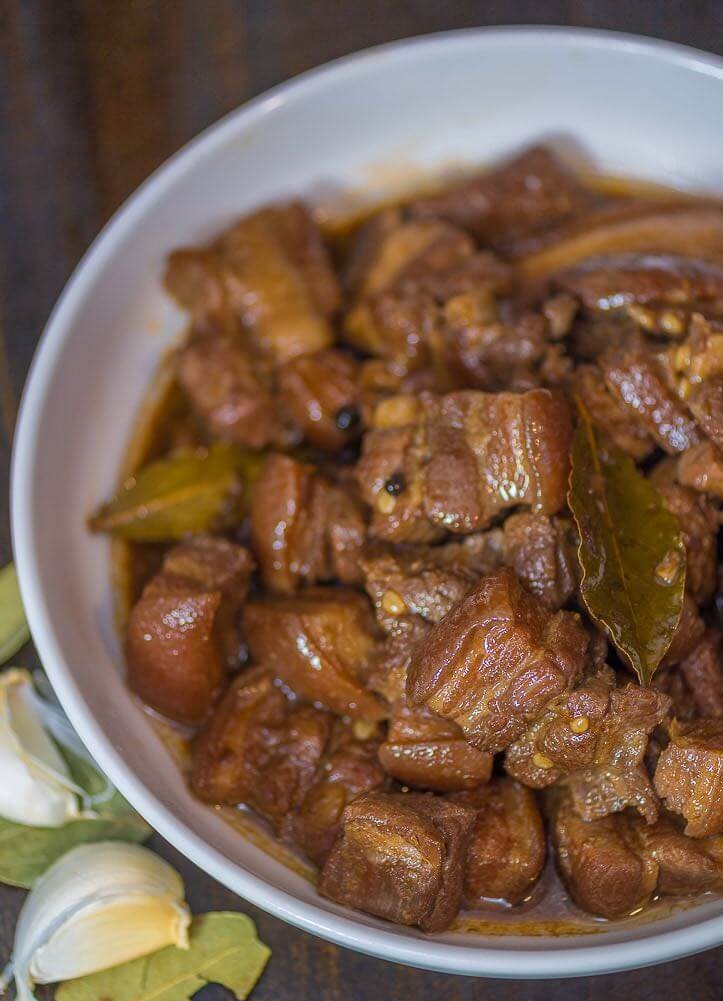
Pork Adobo is pork cooked in soy sauce, vinegar, and garlic. This is considered by many as the Philippine’s national dish because of its popularity, ease in preparation, and long storage life. Adobo is not only limited to pork and chicken, other meats, seafoods, and vegetables such as squid, goat meat, veal, beef, shrimp, river spinach can also be cooked this way. This recipe is one of the easiest and best that you will find.


If the word “adobo” is mentioned, at first you might be unsure of what it is pertaining to; is it the Mexican adobo or the version from the Philippines. This recipe is obviously for the Philippine Adobo which is also one of the signature dishes of the Philippines.

Pork Adobo Recipe

This is a recipe for Pork Adobo.

 Course Main Course 

Cuisine Filipino 

Keyword adobo, adobong baboy, inadobo, pork adobo 

Prep Time 10 minutes 

Cook Time 1 hour 

TotalTime 1 hour 10 minutes 

Servings 4  people 

Calories 1211 kcal 

Ingredients

  • 2 lbs pork belly
  • 2 tablespoons garlic minced or crushed
  • 5 pieces dried bay leaves
  • 4 tablespoons vinegar
  • 1/2 cup soy sauce
  • 1 tablespoon peppercorn
  • 2 cups water
  • Salt to taste

Instructions

  1. Combine the pork belly, soy sauce, and garlic then marinade for at least 1 hour
  2. Heat the pot and put-in the marinated pork belly then cook for a few minutes
  3. Add water, whole pepper corn, and dried bay leaves then bring to a boil. Simmer for 40 minutes to 1 hour
  4. Put-in the vinegar and simmer for 12 to 15 minutes
  5. Add salt to taste
  6. Serve hot. Share and enjoy!

Pork Kaldereta Recipe

Pork Kaldereta is a Filipino tomato based stew dish. It is composed of cubed pork ham or belly, potato, carrots, tomato sauce, liver spread and other vegetables. Beef Kaldereta is the more popular version, but this dish is also as good as it.


The secret in preparing a good pork kaldereta is all in the meat. Make sure to use high quality meat because this can make or break the outcome of your dish. I also recommend the use of liver spread because it will make your kaldereta stand out.


Remember that a true kaldereta dish should have liver spread or liver paste as one of its ingredients. Green olives, on the other hand, will give your dish a nice sour flavor that will compliment well with the other ingredients. You can do without it, but it is better to cook with green olives at least once when making kaldereta so that you will understand what I’m talking about.

Pork Kaldereta Recipe

This is a recipe for pork kaldereta

 Course :Pork 

Cuisine :Filipino 

Prep Time :5 minutes 

Cook Time :1 hour 

Total Time :1 hour 5 minutes

Ingredients

  • 2 lbs. Pork cubed
  • 1 15 oz. can tomato sauce
  • ¾ cup green olives
  • 1 medium red bell pepper sliced
  • 1 medium green bell pepper sliced
  • 2 medium baking potatoes cut into large cubes
  • 2 medium carrots sliced diagonally
  • 1 medium yellow onion sliced
  • 2 teaspoons minced garlic
  • 32 oz. beef broth
  • ½ cup liver spread
  • 3 tablespoons cooking oil
  • Salt and pepper to taste

Instructions

  1. Heat the oil in a cooking pot.
  2. Once the oil is hot, saute the garlic and onion.
  3. Add the pork. Stir and cook for for 5 minutes or until the color turns light to medium brown.
  4. Pour-in the tomato sauce and beef broth. Let boil. Cover and simmer for 60 minutes.
  5. Add the liver spread. Stir and cook for 3 minutes.
  6. Put-in the carrots and potatoes. Cover and cook for 8 to 10 minutes.
  7. Add the olives and bell peppers. Cook covered for 8 minutes.
  8. Add salt and pepper to taste.
  9. Turn-off the heat. Transfer to a serving plate.
  10. Serve. Share and enjoy!

Pork Sinigang Recipe


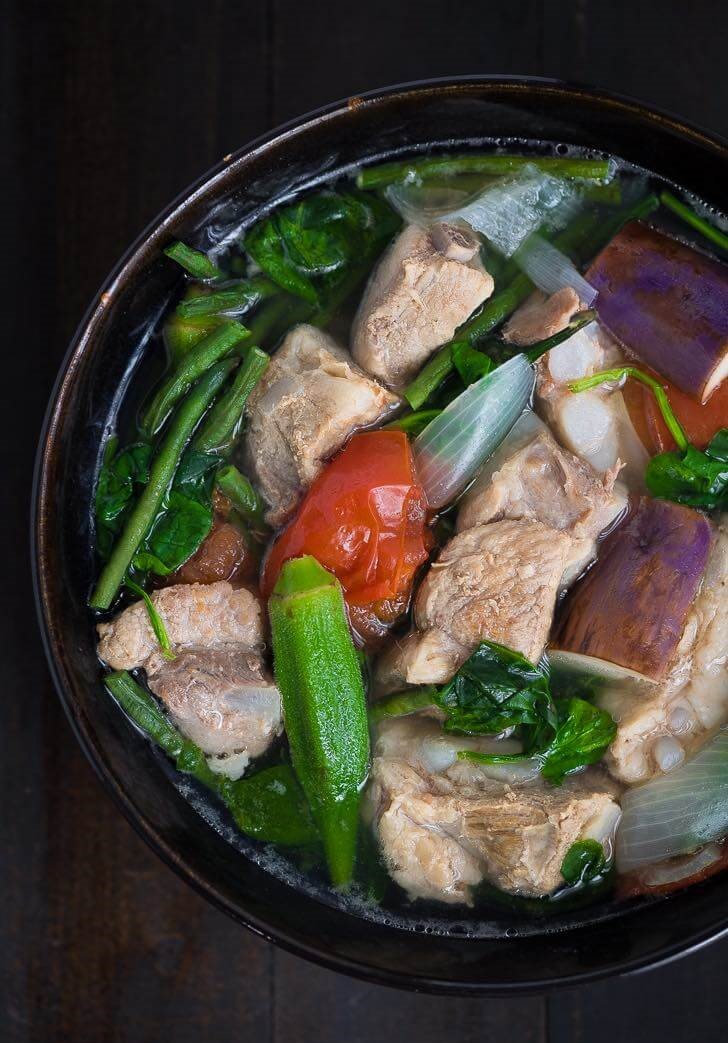
A sour soup/stew made with pork meat, beef or seafood, mixed with a variety of vegetables. Any sour fruit such as tamarind, unripe mango and pineapple is usually used as the souring agent.

Pork Sinigang or Sinigang na Baboy is a sour soup native to the Philippines. This recipe uses pork as the main ingredient. Other proteins and seafood can also be used. Beef, shrimp, fish are commonly used to cook sinigang. The chicken version, on the other hand, is called sinampalukang manok. I prefer to use either pork belly or buto-buto when cooking sinigang. The latter refers to cuts with bones intact. These are either pork neck bones, chopped spare ribs, and chopped baby back ribs. Pork shoulder and ham can also be used when cooking sinigang na baboy.

The quality of this dish depends on the souring agent. This is the ingredient that makes the soup sour. The most common and widely used is unripe tamarind. It is known as sampaloc in the Philippines. Other fruits such as guava, tomato, bilimbi or kamias, green mango, pineapple, and wild mangosteen or santol can be used to make the sinigang taste sour.

Ingredients

  • 2 lbs pork belly or buto-buto
  • 1 bunch spinach or kang-kong
  • 3 tablespoons fish sauce
  • 12 pieces string beans sitaw, cut in 2 inch length
  • 2 pieces tomato quartered
  • 3 pieces chili or banana pepper
  • 1 tablespoons cooking oil
  • 2 quarts water
  • 1 piece onion sliced
  • 2 pieces taro gabi, quartered
  • 1 pack sinigang mix good for 2 liters water

Instructions

  1. Heat the pot and put-in the cooking oil
  2. Sauté the onion until its layers separate from each other
  3. Add the pork belly and cook until outer part turns light brown
  4. Put-in the fish sauce and mix with the ingredients
  5. Pour the water and bring to a boil
  6. Add the taro and tomatoes then simmer for 40 minutes or until pork is tender
  7. Put-in the sinigang mix and chili
  8. Add the string beans (and other vegetables if there are any) and simmer for 5 to 8 minutes
  9. Put-in the spinach, turn off the heat, and cover the pot. Let the spinach cook using the remaining heat in the pot.
  10. Serve hot. Share and enjoy!